Prabowo's false claim about Iran's nuclear weapons will cost him credibility in the Middle East
Prabowo Subianto's claim that Iran already possesses nuclear weapons was unsupported and contradicted by available evidence from the International Atomic Energy Agency (IAEA), which has consistently found no proof that Iran is developing a nuclear bomb. By presenting the claim as fact and predicting a regional nuclear arms race without evidence, he echoed a disputed narrative while risking Indonesia's diplomatic credibility with both Iran and its Gulf partners. Iran's embassy publicly rejected the remarks the following day, highlighting the importance of fact-checking in foreign policy, where a single inaccurate statement can damage years of carefully built credibility.
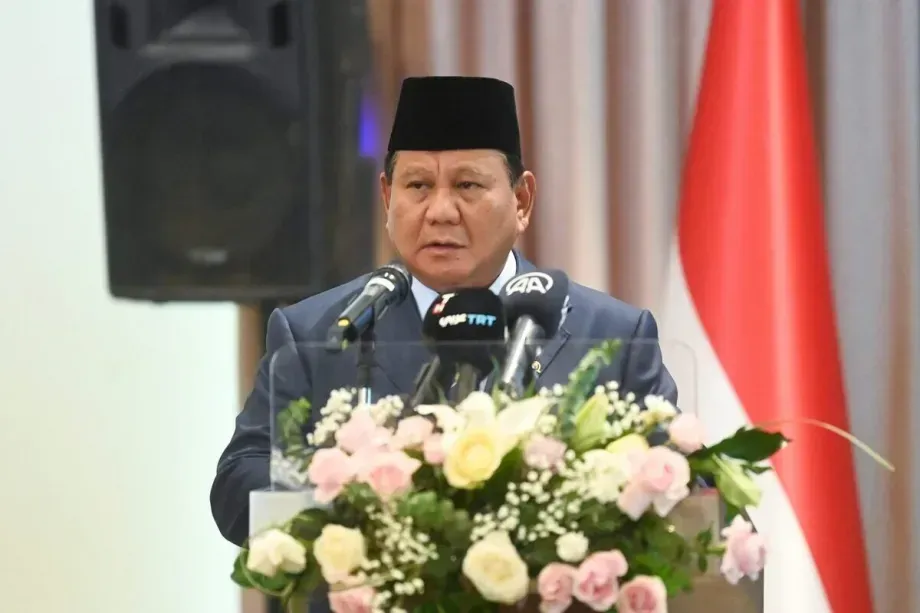
On 1 August, at a business forum in Jakarta, President Prabowo Subianto told a room of executives that Iran already has nuclear weapons, and that a chain reaction was now underway across the region. His exact words, as reported, were: “It is said that Iran already has nuclear weapons. Now Saudi Arabia wants one too. If Saudi Arabia wants nuclear weapons, it’s possible the UAE will also want them, Qatar will also want them, Egypt will also want them.” He did not say who had told him about the bomb, and he offered no evidence for the domino effect he predicted — he simply stated all of it as common knowledge, in front of business leaders and cameras.
The claim is false, and everything built on it was unscripted and unchecked. The checking, however, would have been cheap: ten minutes with the public reports of the world's nuclear watchdog.
The facts have not moved. Iran belongs to a treaty that bans it from building nuclear weapons and allows only peaceful uses, like power generation and medical research. Inspectors from the IAEA have checked Iran's facilities many times under that treaty and always found the same thing: a civilian programme, not a weapons one. Even during the twelve-day war with the US and Israel earlier this year, when Tehran had the least reason to hold back, the agency's head said again there was no sign of a weapon being built. About a week into that war, on 4 March, Rafael Grossi said there was no evidence Iran was building a nuclear bomb; on 6 April he repeated the conclusion, while flagging concern over Iran's stockpile of highly enriched uranium and the limited access granted to his inspectors. Those limits have a specific cause: in June 2025 the United States struck the sites at Fordow, Natanz and Isfahan — the first direct US attack on Iranian soil since 1979 — and the agency has been unable to inspect those three sites since. Decades ago, Iran's founding religious leader banned weapons of mass destruction under Islamic law, and that ban still stands.
What makes the remark indefensible is where it came from: not Indonesian intelligence, not independent analysis, but a claim the US and Israel have pushed for years to isolate Iran diplomatically — one that outlasted the failed 2018 nuclear deal and hardened after this year's war. Prabowo did not attribute it or flag it as disputed. He stated it as settled fact and moved on.
The damage will not stay contained to that one afternoon. Saudi Arabia, the UAE and Qatar are three of Indonesia's most important Gulf partners, and all have spent two years quietly repairing ties with Tehran. Saudi Arabia and Iran restored diplomatic relations in 2023, and Gulf governments have largely avoided endorsing the idea that Iran is about to build a bomb. A foreign president casually suggesting they are now racing toward nuclear weapons reads as someone who has not studied a subject they manage with unusual care.
There is a domestic dimension too. Jakarta has spent years building a reputation as a sympathetic voice on Middle East affairs — outspoken on Gaza, critical of Israel, a bridge between the Muslim-majority world and international forums. Iran has been one of the more committed state backers of the Palestinian cause. A false claim about its nuclear programme tells the region that Prabowo's grasp of its politics may be thinner than his rhetoric on Palestine suggests.
None of this puts Iran beyond criticism, or nuclear weapons in the region beyond debate — Israel's own undeclared arsenal, tellingly, never draws this kind of attention. But a head of state does not get to guess at the world's most dangerous weapons and expect it to cost him nothing.
Iran's embassy in Jakarta did not let it pass: a day after the speech, it stated publicly that Tehran has never pursued nuclear weapons and never will, and Ambassador Mohammad Boroujerdi added that Iran's resilience during this year's war had already answered the question without needing a warhead to do it. Prabowo was corrected in public by the very embassy his remarks had put on the spot. The failure to check is his alone, and it will not be forgotten quickly: every future statement he makes on Iran, Saudi Arabia or the wider Middle East will now be read against this one. Credibility in foreign policy takes years to build and one afternoon to spend.